Ghost in the Shell
Notes
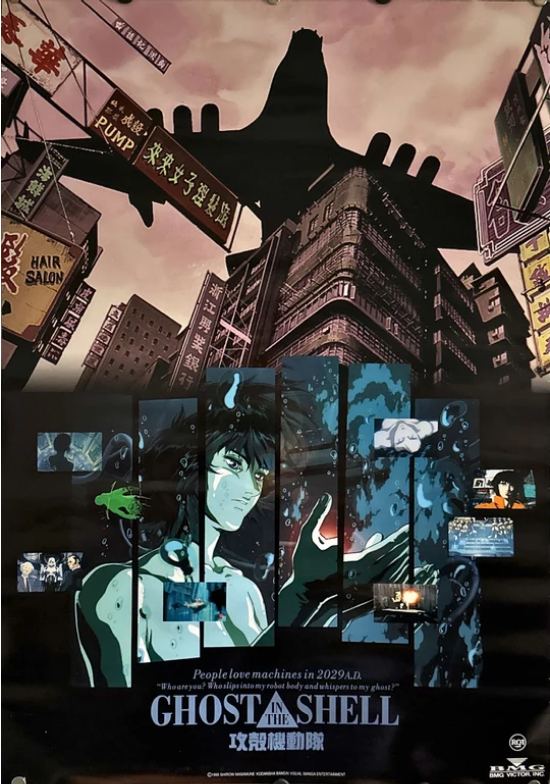
Is your "self" something you were born with, or is it a structure you’ve been building... piece by piece? Today, this question feels less like science fiction and more like our daily reality. We spend our lives curated through Instagram and social media, constantly feeding an algorithm that mirrors a distorted version of us back to ourselves. Now, with the rapid advancement of AI, the lines are blurring even further. If an artificial intelligence can mimic your voice, your writing style, or even your aesthetic, where does that leave your actual identity? In this month of April where we explore rebirth, we turn to the cyberpunk landmark Ghost in the Shell (1995). While we often think of rebirth as a return to nature, this story suggests a more radical, structural metamorphosis. It follows Major Motoko Kusanagi, a cyborg who begins to wonder if her "ghost"—her soul—is real or merely a byproduct of her programming. It challenges the very idea of persistence: if every part of your digital presence can be replicated, and your memories are stored in a cloud that can be hacked or rewritten, what exactly is it that survives? If your data can exist without you, and a machine can think like you, are you still the protagonist of your own life, or have you already been replaced by a more efficient version of your own ghost? Is to be reborn, to be your own self, or is to embrace the unknown version of yourself waiting to be found in the noise? It brings to the question, If given the chance to shed your physical form and merge with the noise of the infinite, would you still claim to be you?