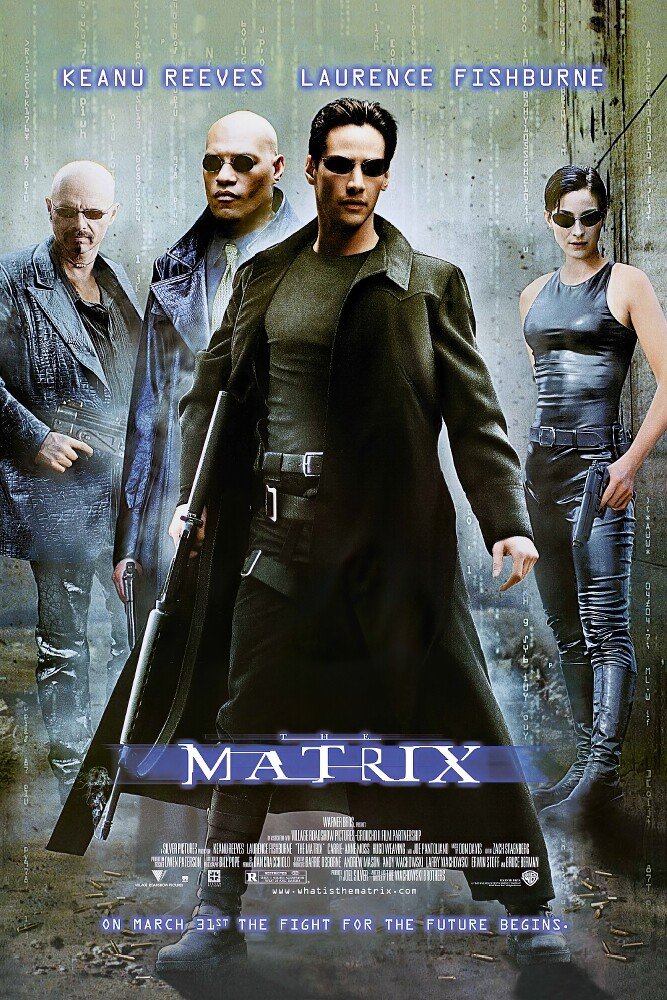
The Matrix
Is your world real, or is it simply the image of a world?
In the green-tinted, industrial-brutalist landscapes of The Matrix, the "mirror" is the simulation itself—a digital veil designed to provide a cohesive, comforting fiction for a humanity that has been reduced to a power source.
To understand Neo’s journey is to understand the terrifying moment the Lacanian Mirror Stage is forcibly undone. Lacan suggests that we form our "self" by identifying with an external image that looks more perfect and stable than we feel. The Matrix is the ultimate version of this: a collective "mirror" where everyone sees a curated, idealized version of their lives while their physical bodies remain trapped in a messy, chaotic reality. When Neo touches the liquid mirror after taking the red pill, the silvered surface swallows him. This is the moment of "unsettling"—the realization that the "who" he saw in the reflection was a digital ghost.
He is forced to confront the gap between his "Residual Self-Image" and the cold, unpolished truth of the machine world. But once the simulation is shattered, Neo must move beyond the image and seek the Hegelian struggle for recognition.
In the Matrix, the individual is a slave to a system that refuses to see them as anything more than a battery. For Hegel, a self only becomes truly "conscious" when it is recognized by another mind as an equal. Neo’s transformation into "The One" is not just about gaining powers; it is about the struggle to be recognized by the system (the Agents) and the Other (Morpheus and Trinity) as a free subject. When Neo finally stands his ground and says, "My name is Neo," he is demanding the final Hegelian acknowledgment: that he is no longer a reflection of the program, but a self-authored being.
Ultimately, The Matrix suggests that the mirror is a barrier to the "beginning of awareness."
The "self" is not the digital avatar or the curated life; it is the mind that chooses to look past the surface. We are the architects of a reality that exists in the tension between the code we are given and the truth we dare to see.
If you woke up tomorrow and the mirror showed you a world you didn't recognize, would you try to fix the reflection, or would you try to break the glass?
Notes
In The Matrix (1999), the simulation acts as a digital Lacanian mirror, providing a "Residual Self-Image" that offers a false sense of wholeness while hiding the fragmented reality of the physical body. Neo’s journey is a violent break from this misrecognition, moving into a Hegelian struggle where he demands recognition from a system that views him only as an object. By "laboring" within the code, he subverts the Master-Slave dynamic, transforming from a passive reflection of the machines into a self-authored subject. The self, therefore, is realized not in the polished digital image, but in the revolutionary act of shattering the glass to claim one's own consciousness. #matrix #self #philosophy #hegel #lacan [scifi, cyberpunk]