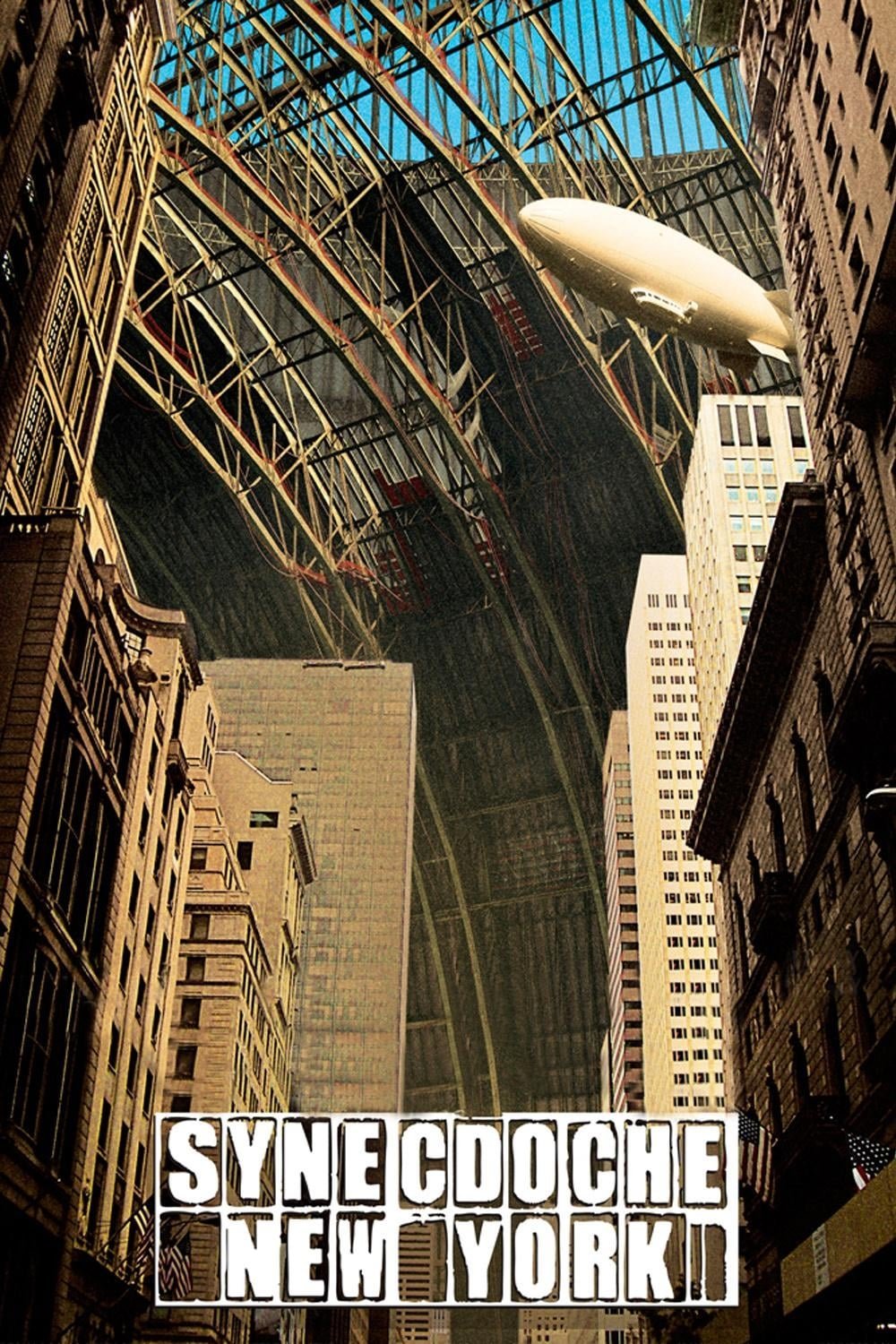
Synecdoche, New York
Notes
What happens when the map completely swallows the territory? In Charlie Kaufman’s masterpiece Synecdoche, New York, Caden Cotard attempts the ultimate artistic gamble: to build a life-sized, flawless replica of his own existence inside a massive warehouse. He wants to capture reality without the clutter of illusions. But as the set expands and actors begin playing the actors who play the actors, Caden doesn't find truth. Instead, he constructs a towering monument to a fundamental human truth: the terrifying, endless loop of desire. To understand Caden’s descent, we have to look through the lens of Jacques Lacan. For Lacan, desire is never about a specific, tangible object. We don’t actually want the car, the partner, or the perfect career. Desire is born out of a fundamental, structural lack—a radical void left behind when we enter language and separate from the world. Because this lack is infinite, our desire can never be satisfied; it endlessly slides from one object to another. This is exactly what Caden undergoes. He thinks that if he can just build the set large enough, or tweak the script perfectly enough, he will finally capture the "essential truth" of his life. But his warehouse is a literalization of the Lacanian drive: a sprawling, artificial grid that grows exponentially because the core of what he is looking for remains perpetually out of reach. The stage can never be big enough to hold the void. This endless architectural chase collides heavily with G.W.F. Hegel’s concept of recognition. Hegel argued that a solitary mind cannot understand itself by sitting alone in a room; self-consciousness only awakens when it is seen and validated by another conscious mind. We desperately need the Other to look back at us and say, “I see you.” Caden is starved for this recognition. To fix this, he hires Sammy to play him in the production. But in a brilliant Hegelian twist, the moment Caden seeks his reflection in the actor, the mirror fractures. He becomes entirely dependent on the actor’s interpretation of him just to understand his own day-to-day choices. The self is no longer an anchor; it is a chaotic, outsourced performance distributed across an army of substitutes. Ultimately, Synecdoche, New York reveals that the "self" is not a solid, permanent monument, but an ongoing fiction we write to survive the friction of existence. We are all Caden Cotard, micro-managing the scripts of our lives, casting the people around us into pre-programmed roles, and building elaborate warehouses out of our expectations just to mask the terrifying quiet inside. We build and build, hoping that if the production is grand enough, we will finally feel real. If your identity is entirely constructed out of the roles you play and the echoes of how others see you, who are you when the director finally calls cut?